
Act One: The First Dive — 1983
The Fisherman’s Tale
It began, as so many things do in this part of the world, with a story told over coffee in a kopitiam.
In 1983, a fisherman in Tawau mentioned, almost in passing, that there was an island to the south — a place called Sipadan — where the sea was unlike anything he had seen. He spoke of a giant octopus. Of fish so thick in the water you could barely see through them. Of turtles that came ashore in numbers that darkened the beach.
I was young, brave, and I had a camera, and I decided to go and see for myself.
There were no resorts on Sipadan in 1983. No dive operators, no boats running daily trips, no names on the dive sites. The island was a green thumbprint on the Celebes Sea, rising from water so deep that the continental shelf fell away almost at the shoreline. I hired a 30-foot fishing boat which would be my diving and living quarters for three days, and arrived to find a place that seemed to exist outside of time.
I entered the water with two other ladies — my men friends had chickened out with the threat of pirates raging in these waters.

What I found beneath the surface was, quite simply, the most extraordinary marine environment I had ever seen. The wall dropped away beneath me into an infinite blue, and on that wall — every centimetre of it — life pressed outward in impossible profusion. Gorgonian fans the size of small trees. Coral gardens that made the reef systems I had photographed elsewhere seem impoverished by comparison. And the fish — the fisherman had not exaggerated. Schools of bigeye trevally that turned the water silver. Bumphead parrotfish moving in slow, deliberate herds, their foreheads crashing against coral in a sound you felt as much as heard. Hawksbill turtles that regarded me with the mild curiosity of creatures for whom a million years of ocean had removed all urgency.
I did not have words for it then. I had a camera, and I used it. Mind you, this was the time when cameras used film — 36 shots each roll, and no way to know if you got it right.
I knew, in the way that photographers sometimes know, that I had found something that the world had not yet seen.

The Shadow Beneath the Surface
I returned to Sipadan several times in the years that followed my first dive. The reef remained as breathtaking as I remembered — if anything, each return deepened my understanding of just how exceptional it was. But the island above the waterline told a darker story.
On the beach each evening, a fisherman laid a longline — roughly a hundred baited hooks stretched far out into the waters that held some of the finest shark populations in the Celebes Sea. By morning he hauled the line in. The catch was overwhelmingly sharks. On the rocks at the water’s edge he would work through them methodically, cutting the fins and setting them aside for market. The carcasses — some of them substantial animals — were left where they fell. I felt physically sick watching it.
At night, the couple who lived in the small attap hut on the island were at work on the beach with a metal rod, probing the sand for turtle nests. When the rod found resistance, they dug. The eggs — dozens per nest, sometimes more — went into a net bag. By morning they were on a boat to Semporna, bound for the market.
This was Sipadan in the mid-1980s. Below the surface, one of the great undiscovered reefs on earth. Above it, an unregulated harvest that no one was watching and no one was stopping.
I photographed what I saw. I did not know then whether anyone would ever care.


The Word Gets Out
When I returned from that first dive, I brought back something more than photographs.
My flight home to Kuala Lumpur transited through Kota Kinabalu, and I stopped to return the dive equipment I had borrowed from Borneo Divers. Ron Holland asked me, as one diver asks another, how Sipadan had been.
I told him everything. The wall. The turtles. The bumphead parrotfish and the schools of trevally so dense they turned the water silver. I told him it was unlike anything I had dived in Malaysian waters, and that he should start running trips there immediately.
Ron took my advice.
A few months later he called to tell me that Borneo Divers was making its first trip to Sipadan. Those early expeditions were exactly that — expeditions. Guests lived aboard a slow barge anchored off the island, and the kitchen and dining area was a tent pitched on the beach. There were no facilities, no permanent structures, nothing between the divers and the raw, unhurried wildness of the place. A year or two later, simple A-frame huts appeared on the beach — a modest concession to comfort that felt, at the time, almost luxurious.
But the diving needed no improvement. It was exactly what I had told Ron it would be.


My most constant companion on those dives was my wife, Mimi Wong — divemaster, camera carrier, decompression timekeeper, and my most accomplished underwater model. On dives when I carried three cameras, she carried two. She watched my back so I could watch the reef.
Word travelled the way it always does among divers — urgently, incompletely, like a secret too good to keep. Sipadan’s name began to move through the diving community in whispers. And then, in 1988, a ship appeared in Semporna harbour that would turn those whispers into something the whole world could hear.
Act Three: The World Arrives
The World Arrives
Cousteau’s documentary changed everything. Within months of its broadcast, Sipadan’s name was circulating in dive shops from Tokyo to Toronto, in the pages of Skin Diver magazine, in the itineraries of most dive tour operators. The island that had no resort in 1983, no electricity, no fresh water, and no name recognition beyond the fishing communities of the Semporna archipelago, was suddenly on every serious diver’s bucket list.
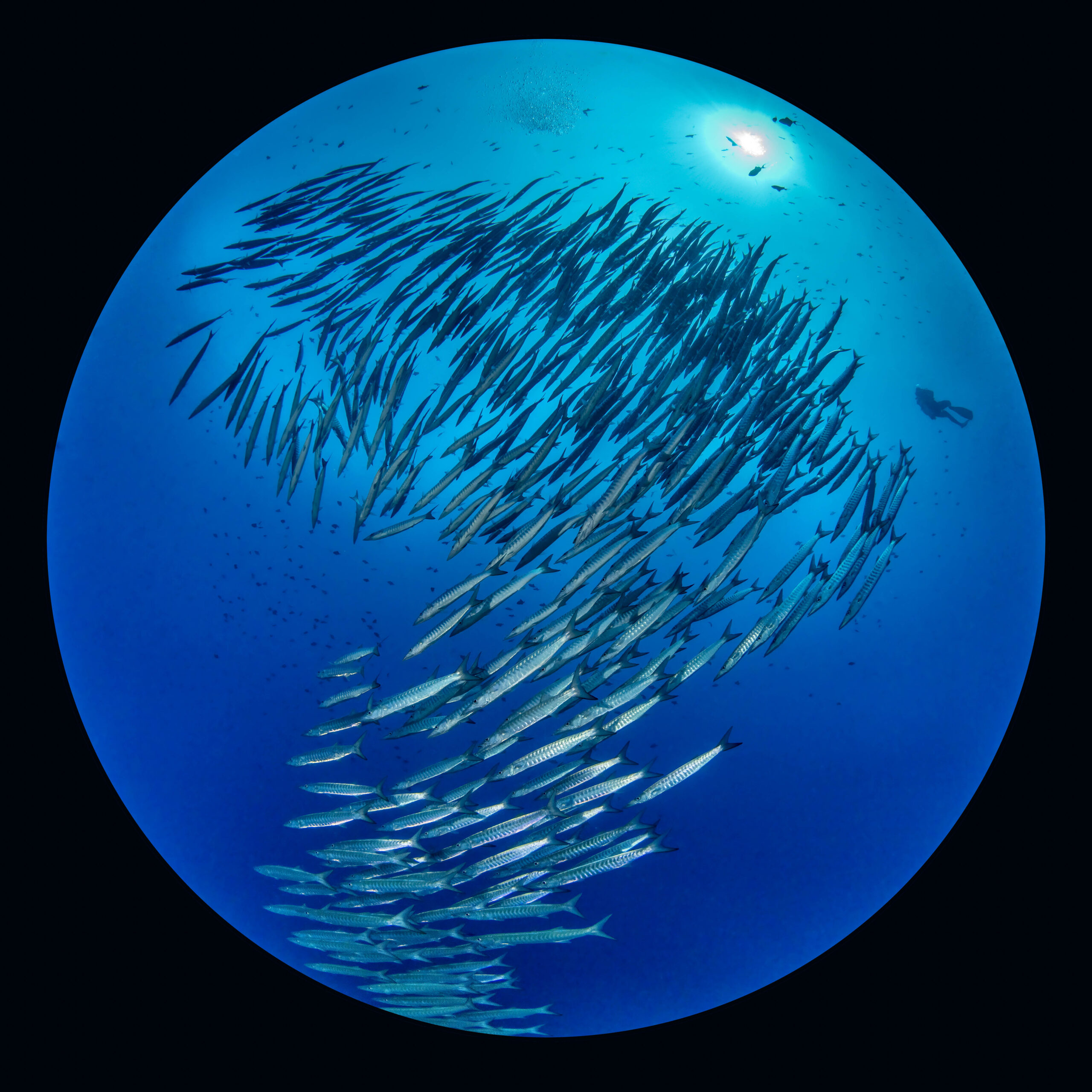
Resorts appeared almost overnight. First one, then several, each staking a claim on that tiny, fragile strip of sand — an island barely large enough to walk around in fifteen minutes. Generators ran day and night. Dive boats queued at the famous sites. At Barracuda Point, where I had once hovered alone in the blue, watching the tornado of jacks reform around me in silence, there were now cameras everywhere, bubbles rising in columns, fins stirring the sand.
The reef itself, miraculously, held. Sipadan’s walls and the life they harboured proved more resilient than anyone had a right to expect. But the pressure was visible, and it was growing.
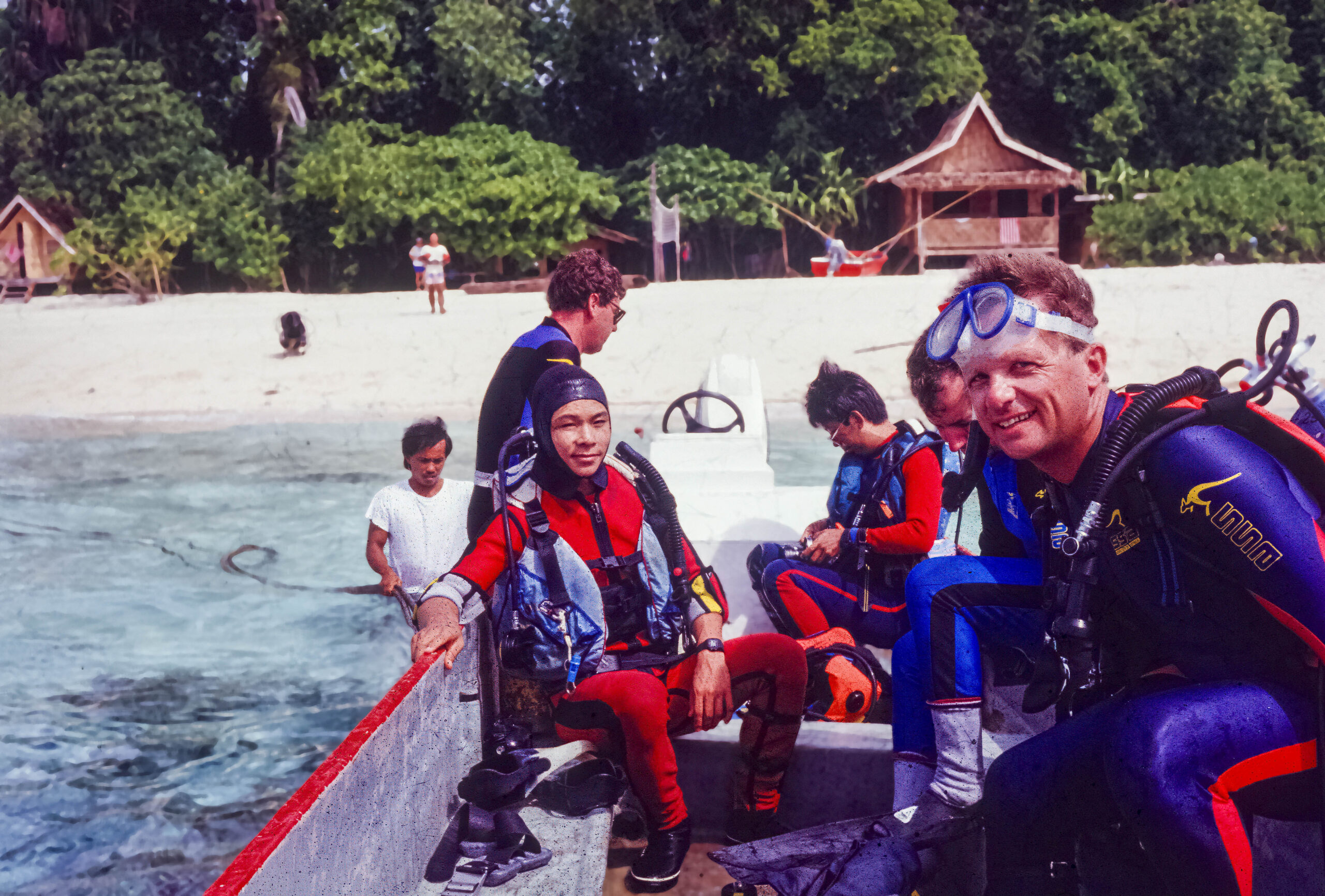


It was around this time that I made a decision to retire from diving, for two reasons. Firstly I was overwhelmed with other diving traffic while underwater — I am never used to this. Diving for me has always been like exploring the wilderness, the unknown, experiencing the environment with only me and my diving buddies. I think I had seen enough of the underwater world. Secondly, I realised that I had ignored the topside all this while, so I decided to spend time from henceforth exploring the land above the waterline.
Mimi on the Wall
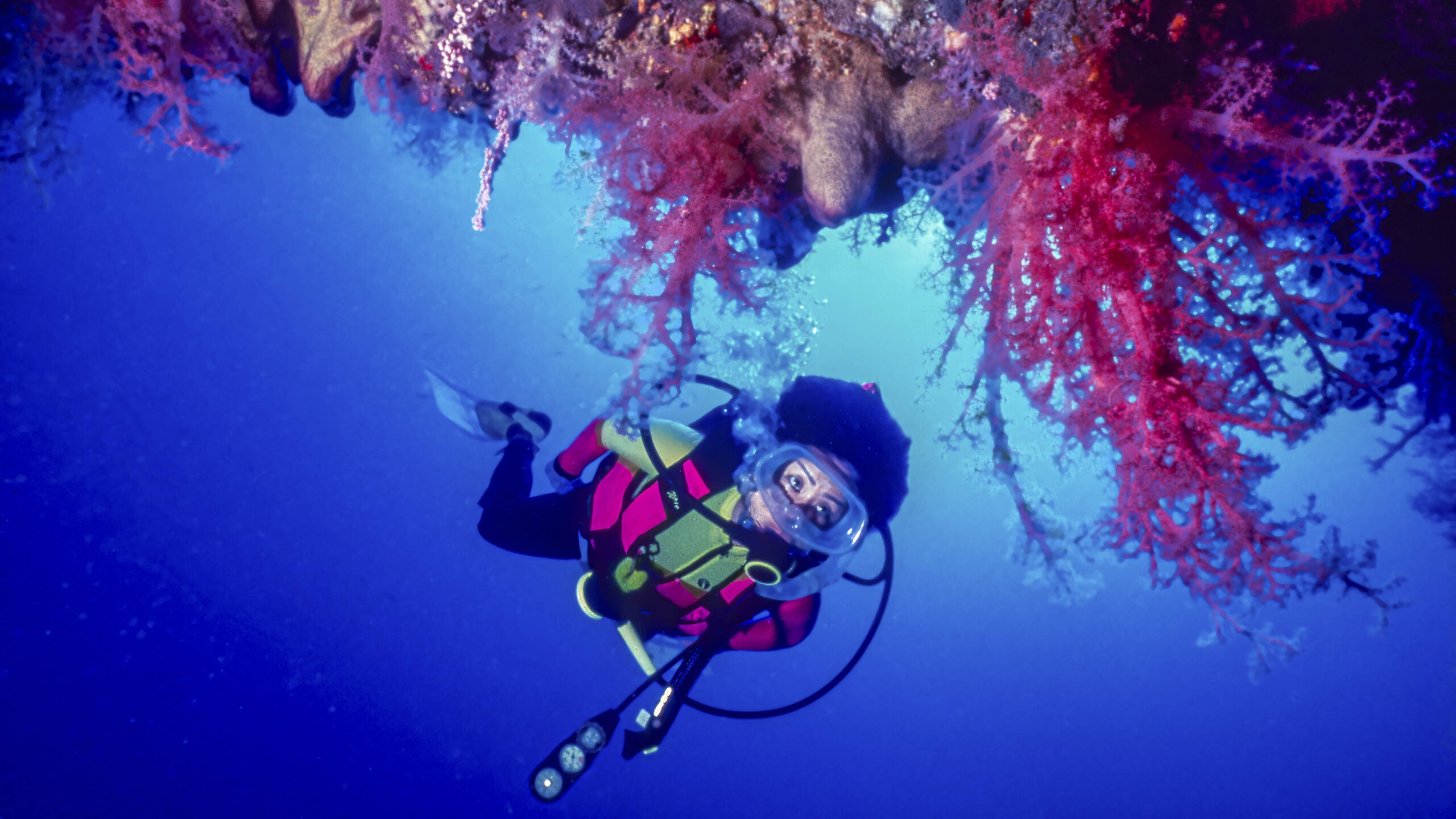
Through all the years of diving Sipadan, my most constant companion was my wife, Mimi Wong. She was divemaster, camera carrier, and timekeeper — on dives when I carried three cameras, she carried two, watching my back and calling time on my decompression. She was also my most accomplished underwater model; comfortable at any depth, instinctively aware of the frame, and effortlessly graceful in front of the lens. Sipadan was always a family affair.


The Reckoning
By the late 1990s, it was clear that Sipadan was being loved to the edge of ruin. The resorts multiplied until there were half a dozen operations crowding the island’s narrow beach. Waste disposal was rudimentary at best. The water table was compromised. Boat anchors, however unintentionally, found coral. And the sheer volume of divers — hundreds per day at peak season — was beginning to leave its mark on the most visited sites.


The Sabah State government had watched Sipadan’s transformation from obscurity to global icon with a mixture of pride and mounting alarm. Here was one of the country’s greatest natural treasures, and it was being consumed by the very admiration it had earned.
The decision, when it finally came, was bold and — to the resort operators who had built their livelihoods on the island — brutal. In 2004, the Sabah Statement government ordered all resort infrastructure removed from Sipadan. Every building, every generator, every jetty. The island was to be returned, as much as possible, to itself. Divers could still come, but under a strict permit system — a ceiling of 120 divers per day, allocated by lottery among the operators now based on the larger islands of the archipelago. Mabul and Kapalai absorbed the accommodation. Sipadan itself would be left to the turtles and the fish.
The operators protested. Compensation was disputed. Legal challenges wound through the courts. But the order held.
When the last resort came down and the generators fell silent for the first time in nearly two decades, something remarkable happened. The beach, churned and compacted by years of foot traffic and construction, began its slow recovery. The turtle population, which had shown signs of stress, stabilised. The coral, spared the worst of the anchor damage, continued to do what coral has always done — grow, slowly, millimetre by millimetre, in the direction of light.



Sipadan had survived its fame. Not unchanged — nothing survives that unchanged — but intact in the ways that matter most. The wall still dropped away beneath you into water so blue it seemed invented. The life it supported still took the breath away.
I thought of 1983. The fisherman’s story. The moment I slipped beneath the surface for the first time and understood, without needing words for it, that I had found something extraordinary.
Cousteau had thirty years of ocean behind him when he called Sipadan a piece of untouched art. I had been a young and brave photographer with a camera, a tank, and a tip from a fisherman.
We had both been right.
The Inheritance
The last three years have given me the finest images of my experience at Sipadan. I did not expect that. After four decades of diving these waters, I thought I knew what to expect — and Sipadan surprised me still. The marine life has returned with a vigour that borders on the miraculous. The bumphead parrotfish herds are larger. The barracuda tornadoes tighter and more numerous. The turtles, unhurried as ever, move through water that feels cleaner, more alive, more itself than at any point since the resort years. Whatever the 2004 closure cost in disruption and bitterness, the reef has rendered its verdict: it was the right decision.
A day’s diving at Sipadan costs RM889 per person today – Sipadan Park fees. It is not a casual outing. The permit system means planning, waiting, the particular anticipation of something rationed and therefore precious. Divers who come now come with intention. Perhaps that, too, is part of the recovery.
But none of that is what I think about when I close my eyes and remember the last dive I want to tell you about.
On 18 May 2026 — forty-three years after a fisherman in a kedai kopi told me about a giant octopus on an island to the south — I descended into Sipadan’s blue alongside my son, Jet Sim.
I had waited thirty years for Jet to take up diving. Thirty years of hoping that what had shaped my life might one day call to him too. Three years ago, it did. And on 18 May 2026, we dived Sipadan together.
When I took this photograph in my mind I was thinking simply as a father, not a photographer, watching my son drop headfirst into the heart of a thousand jacks, the school parting around him and closing again like water around a stone, the reef stretching away below into the blue immensity that I first entered alone, with a rented tank and a borrowed hope, in 1983.
Cousteau called Sipadan a piece of untouched art. I have spent forty-three years trying to photograph what he meant.


07/06/2026 Author Wong Ck
Thanks Capt Sim for sharing. I enjoyed the article and pictures.
05/07/2026 Author Captain Sim
Hi Wong,
Thank you for your compliments.